Buy brennholzhandel.eu ?
We are moving the project
brennholzhandel.eu .
Are you interested in purchasing the domain
brennholzhandel.eu ?
domain@kv-gmbh.de · 0541-91531010
Buy brennholzhandel.eu ?
How do you transform an object clause or a subject clause into a dependent clause (subordinate clause)?
To transform an object clause or a subject clause into a dependent clause, you can add a subordinating conjunction at the beginning of the clause. For example, changing "I know that he is coming" (object clause) to "I know when he is coming" (dependent clause). Another way is to remove the subject or object pronoun and change the verb form to make it dependent on the main clause. For instance, changing "She believes she can win" (subject clause) to "She believes she can win" (dependent clause). **
Is an infinitive clause a subordinate clause?
Yes, an infinitive clause is a type of subordinate clause. It functions as a single unit within a sentence and is dependent on the main clause for its meaning. Infinitive clauses typically begin with the word "to" followed by a verb, and they can serve various purposes such as expressing purpose, result, or obligation. **


Similar search terms for Clause
Top-Angebote
Products related to Clause:
-
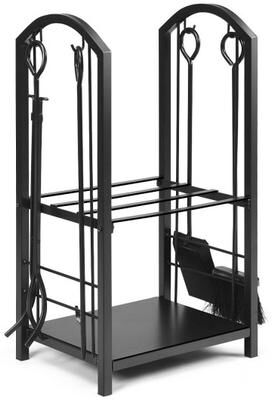
UIMOSO Indoor Firewood Rack, 1.3 ft 2-Tier Firewood Holder with Fireplace Tools, Brush, Shovel - 1.3 ft2-Tier Supports 400 lbs: Engineered with a reinforced double-layer structure, this firewood rack offers a remarkable 400 lbs load capacity, providing enhanced stability and ample storage for logs of all sizes.76,99 $*Shipping: 0,00 $Secure redirect to the provider
-
Belfry Heating Katharine Steel Fireplace Tool Set BlackThis high-quality arch fire screen is a beautifully elegant piece for your home, making this an attractive yet functional screen. Specifically designed to be an exact fit for your Lombard or Sorrento curve top fireplace. Decorative ring for easy handling.. Perfect fit for Lombard Sorrento fireplace.. Fine mesh to prevent damage to carpets or upholstery and protect from stray sparks. Sturdy, steel construction that completely encloses your fire.. Brand Name: Belfry Heating.41,99 £*Shipping: 4,99 £Secure redirect to the provider



-
What are main clause-subordinate clause constructions?
Main clause-subordinate clause constructions are sentences that consist of a main clause and one or more subordinate clauses. The main clause is a complete sentence that can stand alone, while the subordinate clause depends on the main clause for its meaning and cannot stand alone. Subordinate clauses often begin with subordinating conjunctions such as "because," "although," "if," or "when," and they provide additional information or context to the main clause. These constructions allow for more complex and nuanced sentence structures, and they are commonly used in both spoken and written language. **
-
Can an adverbial clause also be a subject clause or an object clause?
No, an adverbial clause cannot be a subject clause or an object clause. An adverbial clause functions as an adverb to modify a verb, adjective, or adverb in a sentence. Subject clauses and object clauses, on the other hand, serve as the subject or object of the main clause, respectively. Each type of clause has a specific grammatical function within a sentence. **
-
Is the main clause and subordinate clause correct?
To determine if the main clause and subordinate clause are correct, you need to ensure that they are grammatically sound and that they make sense when combined. The main clause should be able to stand alone as a complete sentence, while the subordinate clause provides additional information but cannot stand alone. Checking for subject-verb agreement and proper punctuation between the two clauses can help confirm their correctness. **
-
How do I recognize a relative clause, a conjunctional clause, and an interrogative clause?
A relative clause typically starts with a relative pronoun (such as who, whom, whose, which, or that) and provides more information about a noun in the main clause. A conjunctional clause, on the other hand, is introduced by a conjunction (such as and, but, or because) and connects two independent clauses. An interrogative clause is a type of clause that asks a question and is typically introduced by an interrogative pronoun (such as who, what, when, where, why, or how) or an interrogative adverb (such as how, when, or where). **


How can I recognize a relative clause, a conjunctional clause, and an interrogative clause?
A relative clause is a type of dependent clause that typically starts with a relative pronoun (such as who, whom, whose, which, or that) and provides additional information about a noun in the main clause. A conjunctional clause, on the other hand, is a dependent clause that functions as an adverb, adjective, or noun in a sentence and is connected to the main clause by a conjunction (such as because, although, if, when, etc.). An interrogative clause is a type of clause that asks a question and typically begins with a question word (such as who, what, where, when, why, or how) or with a helping verb followed by the subject. **
Is the accompanying clause in direct speech a main clause or a subordinate clause?
The accompanying clause in direct speech can be either a main clause or a subordinate clause, depending on its role in the sentence. If the clause is expressing a complete thought and can stand alone as a sentence, then it is a main clause. However, if the clause is dependent on the rest of the sentence for its meaning and cannot stand alone, then it is a subordinate clause. It's important to consider the context and structure of the sentence to determine the role of the accompanying clause in direct speech. **
Top-Angebote
Products related to Clause:
-
UIMOSO Indoor Firewood Rack, 1.3 ft 2-Tier Firewood Holder with Fireplace Tools, Brush, Shovel - 1.3 ft2-Tier Supports 400 lbs: Engineered with a reinforced double-layer structure, this firewood rack offers a remarkable 400 lbs load capacity, providing enhanced stability and ample storage for logs of all sizes.76,99 $*Shipping: 0,00 $Secure redirect to the provider
-
How do you transform an object clause or a subject clause into a dependent clause (subordinate clause)?
To transform an object clause or a subject clause into a dependent clause, you can add a subordinating conjunction at the beginning of the clause. For example, changing "I know that he is coming" (object clause) to "I know when he is coming" (dependent clause). Another way is to remove the subject or object pronoun and change the verb form to make it dependent on the main clause. For instance, changing "She believes she can win" (subject clause) to "She believes she can win" (dependent clause). **
-
Is an infinitive clause a subordinate clause?
Yes, an infinitive clause is a type of subordinate clause. It functions as a single unit within a sentence and is dependent on the main clause for its meaning. Infinitive clauses typically begin with the word "to" followed by a verb, and they can serve various purposes such as expressing purpose, result, or obligation. **
-
What are main clause-subordinate clause constructions?
Main clause-subordinate clause constructions are sentences that consist of a main clause and one or more subordinate clauses. The main clause is a complete sentence that can stand alone, while the subordinate clause depends on the main clause for its meaning and cannot stand alone. Subordinate clauses often begin with subordinating conjunctions such as "because," "although," "if," or "when," and they provide additional information or context to the main clause. These constructions allow for more complex and nuanced sentence structures, and they are commonly used in both spoken and written language. **
-
Can an adverbial clause also be a subject clause or an object clause?
No, an adverbial clause cannot be a subject clause or an object clause. An adverbial clause functions as an adverb to modify a verb, adjective, or adverb in a sentence. Subject clauses and object clauses, on the other hand, serve as the subject or object of the main clause, respectively. Each type of clause has a specific grammatical function within a sentence. **
Similar search terms for Clause
-
Belfry Heating Katharine Steel Fireplace Tool Set BlackThis high-quality arch fire screen is a beautifully elegant piece for your home, making this an attractive yet functional screen. Specifically designed to be an exact fit for your Lombard or Sorrento curve top fireplace. Decorative ring for easy handling.. Perfect fit for Lombard Sorrento fireplace.. Fine mesh to prevent damage to carpets or upholstery and protect from stray sparks. Sturdy, steel construction that completely encloses your fire.. Brand Name: Belfry Heating.41,99 £*Shipping: 4,99 £Secure redirect to the provider
-
Belfry Heating Inverness Iron Fireplace Tool Set Tool StandThis regal fireside companion set with ball type finial allows for easy grip when using. The 4 relevant fireplace tools including shovel, brush, tongs and poker, are suspended from a matching stand. A combination of traditional design with the stylish touch of a modern finish. Brand Name: Belfry Heating.47,99 £*Shipping: 4,99 £Secure redirect to the provider
-
Belfry Heating Orion Iron Fireplace Tool Set Tool StandThis 5 piece fire companion set has a modern stylish design. It includes a poker, a tong, a brush, a shovel and a stand. With this stand, you can keep tools organized. Furthermore, this superb companion set has an intricate bold handle to make the set look better. Don't hesitate to add it to your cart! 【Ergonomic Handles & Stable Base】Each tool has a firm handle with loop design,feels good in hand and you will not feel fatigued even use frequently,and the stand equipped with a heavy duty base with 3 legs, aesthetic and stable for daily use. 【5 Piece Fireplace Tools Set】Do you find you are often look for your fire tools when you need them?Our 5 piece fire tool set includes brush,shovel,poker ,tong and stand,which keep your tools organized,you can get your tools at hand conveniently any time.. 【Fits to Any Decorations】It is more than a functional tool,but also a decoration to your house because of its aesthetic design and stylish colour appearance,adds a classic touch to your house, thus,it will be also a very nice and homey hearth gift idea and a house warming gift for relatives and friends' as a new house decoration. 【Multi-functional 】Suitable for most fireplaces,log holder/racks and outdoor pit pits,the fireplace tongs and poker help to safely place kindling and reposition logs while the shovel and fireplace brush features strong bristles to easily sweep ash and debris,why don't buy this practical set?. 【Durability & Long Service Life】Made from high quality black iron with powder-coated finish,rust-proof and solid,also easy to put it together,the top support is strong enough to hang all the tools,durable enough for years of use.. Specification Material: Iron Color: Black+Gold N.W.: About 2.8 kg Overall Height: Approx. 64 cm Package Includes: 1 x 5 Piece Fireplace Tools 1 x Instruction. Brand Name: Belfry Heating.41,99 £*Shipping: 4,99 £Secure redirect to the provider
-
Is the main clause and subordinate clause correct?
To determine if the main clause and subordinate clause are correct, you need to ensure that they are grammatically sound and that they make sense when combined. The main clause should be able to stand alone as a complete sentence, while the subordinate clause provides additional information but cannot stand alone. Checking for subject-verb agreement and proper punctuation between the two clauses can help confirm their correctness. **
-
How do I recognize a relative clause, a conjunctional clause, and an interrogative clause?
A relative clause typically starts with a relative pronoun (such as who, whom, whose, which, or that) and provides more information about a noun in the main clause. A conjunctional clause, on the other hand, is introduced by a conjunction (such as and, but, or because) and connects two independent clauses. An interrogative clause is a type of clause that asks a question and is typically introduced by an interrogative pronoun (such as who, what, when, where, why, or how) or an interrogative adverb (such as how, when, or where). **
-
How can I recognize a relative clause, a conjunctional clause, and an interrogative clause?
A relative clause is a type of dependent clause that typically starts with a relative pronoun (such as who, whom, whose, which, or that) and provides additional information about a noun in the main clause. A conjunctional clause, on the other hand, is a dependent clause that functions as an adverb, adjective, or noun in a sentence and is connected to the main clause by a conjunction (such as because, although, if, when, etc.). An interrogative clause is a type of clause that asks a question and typically begins with a question word (such as who, what, where, when, why, or how) or with a helping verb followed by the subject. **
-
Is the accompanying clause in direct speech a main clause or a subordinate clause?
The accompanying clause in direct speech can be either a main clause or a subordinate clause, depending on its role in the sentence. If the clause is expressing a complete thought and can stand alone as a sentence, then it is a main clause. However, if the clause is dependent on the rest of the sentence for its meaning and cannot stand alone, then it is a subordinate clause. It's important to consider the context and structure of the sentence to determine the role of the accompanying clause in direct speech. **
* All prices are inclusive of VAT and, if applicable, plus shipping costs. The offer information is based on the details provided by the respective shop and is updated through automated processes. Real-time updates do not occur, so deviations can occur in individual cases. ** Note: Parts of this content were created by AI.